Setup holds the goal, the scope and the limits of the plan. The plan is calculated from it, and every change recalculates it. While that runs, the panes show "Recalculating…".
Where: Recommendations, Setup.
The six sections
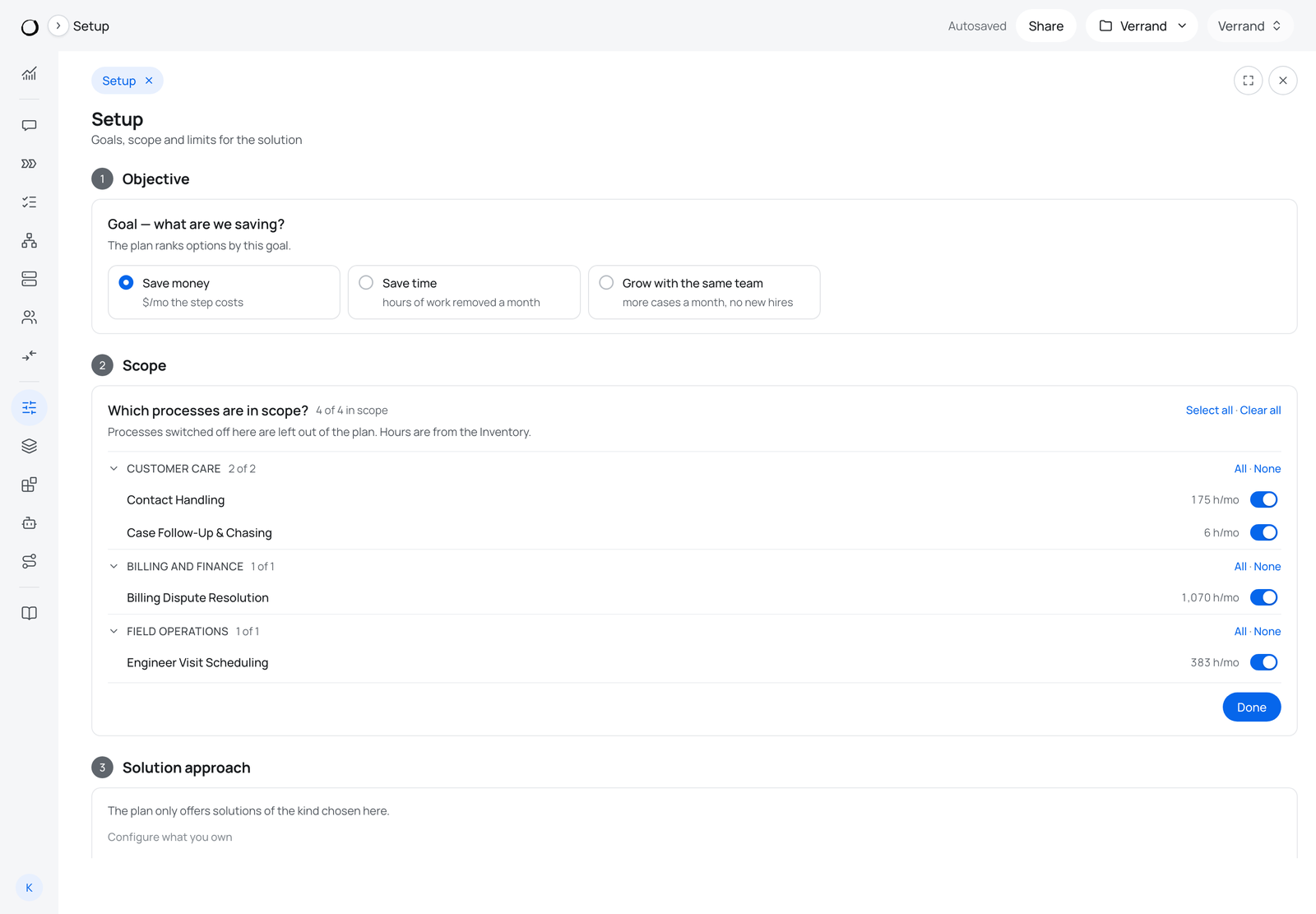
- Objective. "Goal — what are we saving?": Save money, Save time, or Grow with the same team. The goal sorts the options; it never removes one.
- Scope. Which processes are in the plan, grouped by area, with their hours a month from the Inventory. A process switched off here is left out of the plan.
- Solution approach. What kind of solution the plan may offer.
- People & rates. The people in each role and their hourly cost. Savings and per-seat prices are counted from these.
- Assumptions. Minimum saving worth doing, maximum payback for a build, review time per item, whether approvals and sign-offs stay with a person, and the rollout settings the Roadmap uses.
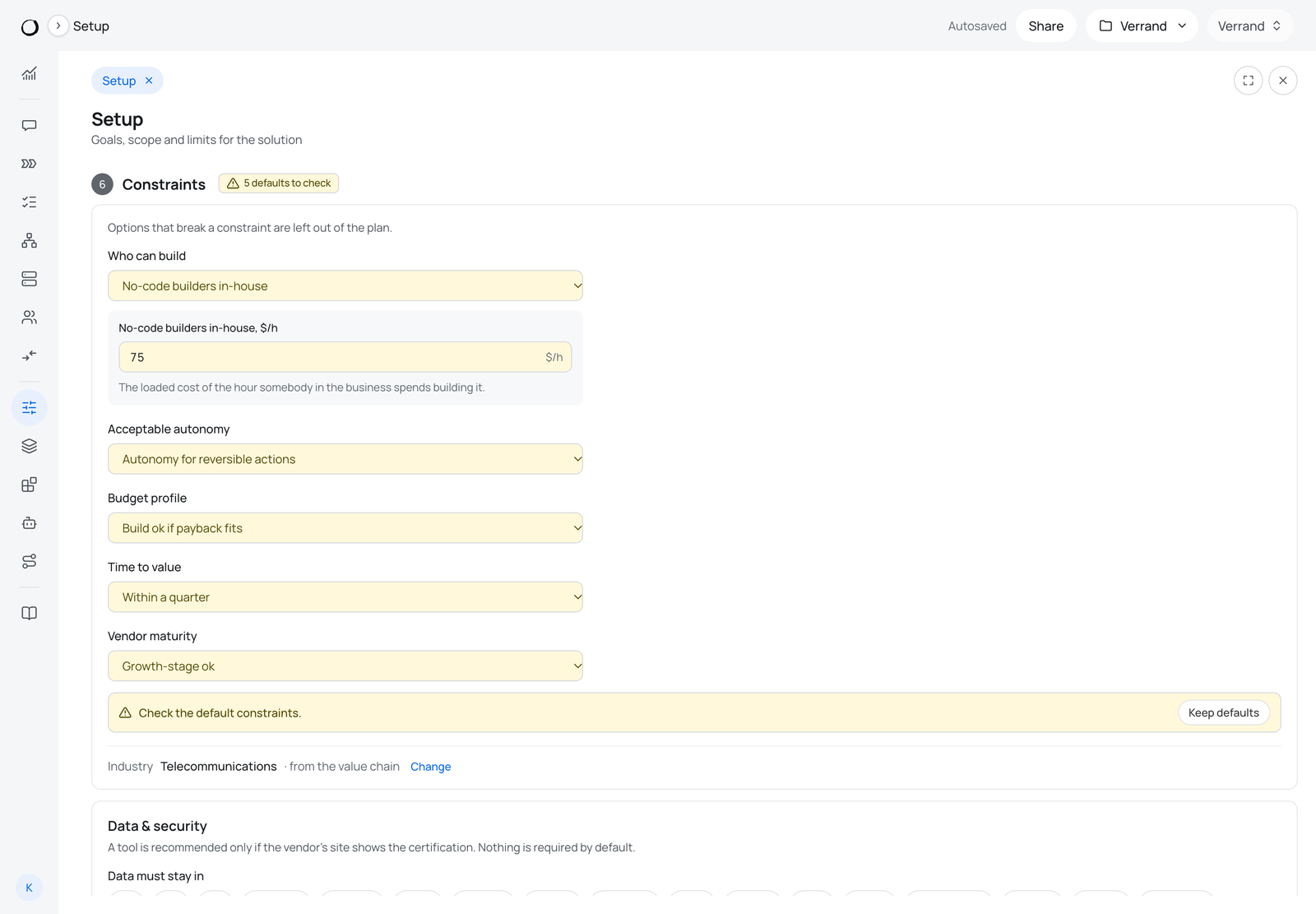
- Constraints. Who can build, acceptable autonomy, budget profile, time to value, vendor maturity, industry, and data and security requirements.
Defaults to check
Every value kawaru.app filled in by default is shown in yellow, with a count such as "6 defaults to check" and a Keep defaults button. A default stays highlighted until someone checks it. The same count feeds Needs attention on the Dashboard.
Hourly costs and people counts change every saving in the plan, so they are worth checking first.
Solution approach
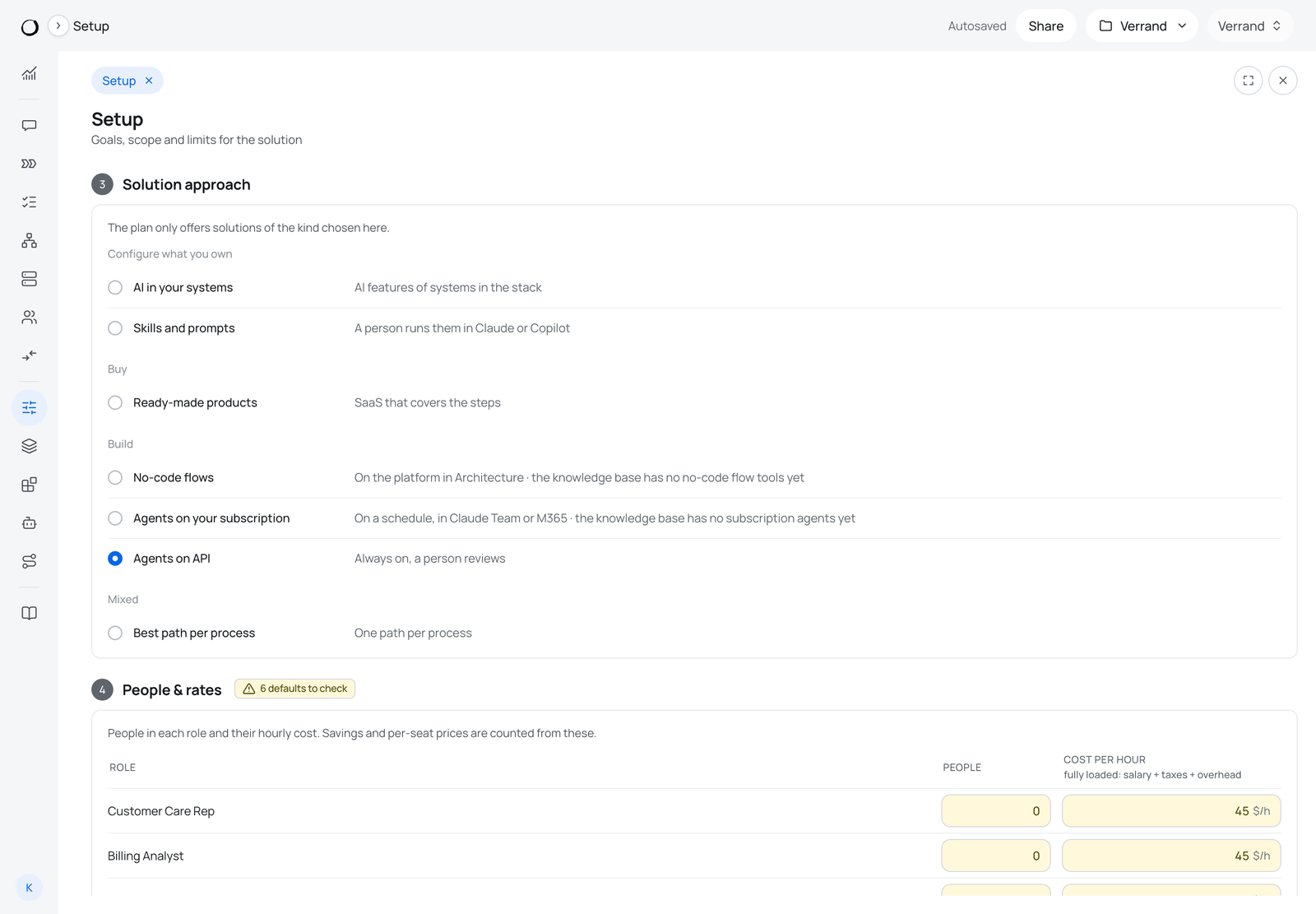
The approach is one choice for the whole plan. Every step gets only that kind of solution, and a step it cannot cover stays with a person, with the reason written next to it.
| Group | Option | What it means |
|---|---|---|
| Configure what you own | AI in your systems | AI features of systems already in the stack. |
| Skills and prompts | A person runs them in Claude or Copilot. | |
| Buy | Ready-made products | SaaS that covers the steps. |
| Build | No-code flows | On the platform chosen in Architecture. |
| Agents on your subscription | On a schedule, in Claude Team or M365. | |
| Agents on API | Always on, a person reviews. | |
| Mixed | Best path per process | One path per process, never a mix inside one process. |
Assumptions worth setting
- Minimum saving worth doing. A process that saves less than this a month is marked "below your minimum". It is not removed.
- Max payback for build. A pick past it is flagged, with what it would save.
- Review time per item. While it is not set, the totals say "excludes review time".
- Approvals and sign-offs stay with a person. With Yes, a step that decides rather than prepares keeps a control point: the agent prepares, a person decides, and the saving counts the preparation.
Constraints
Constraints work differently from the goal: an option that breaks one is left out of the plan.
Who can build, acceptable autonomy, budget profile, time to value and vendor maturity are all limits. A ticked security requirement, such as SOC 2 or ISO 27001, leaves out vendors whose own site does not show it. Data residency only warns. Industry is a preference, not a cut.
Result: a calculated plan for the processes in scope.
Why this step: the same map gives different plans for different goals and limits. A company that can only subscribe to tools gets a different answer from one with developers in-house.